
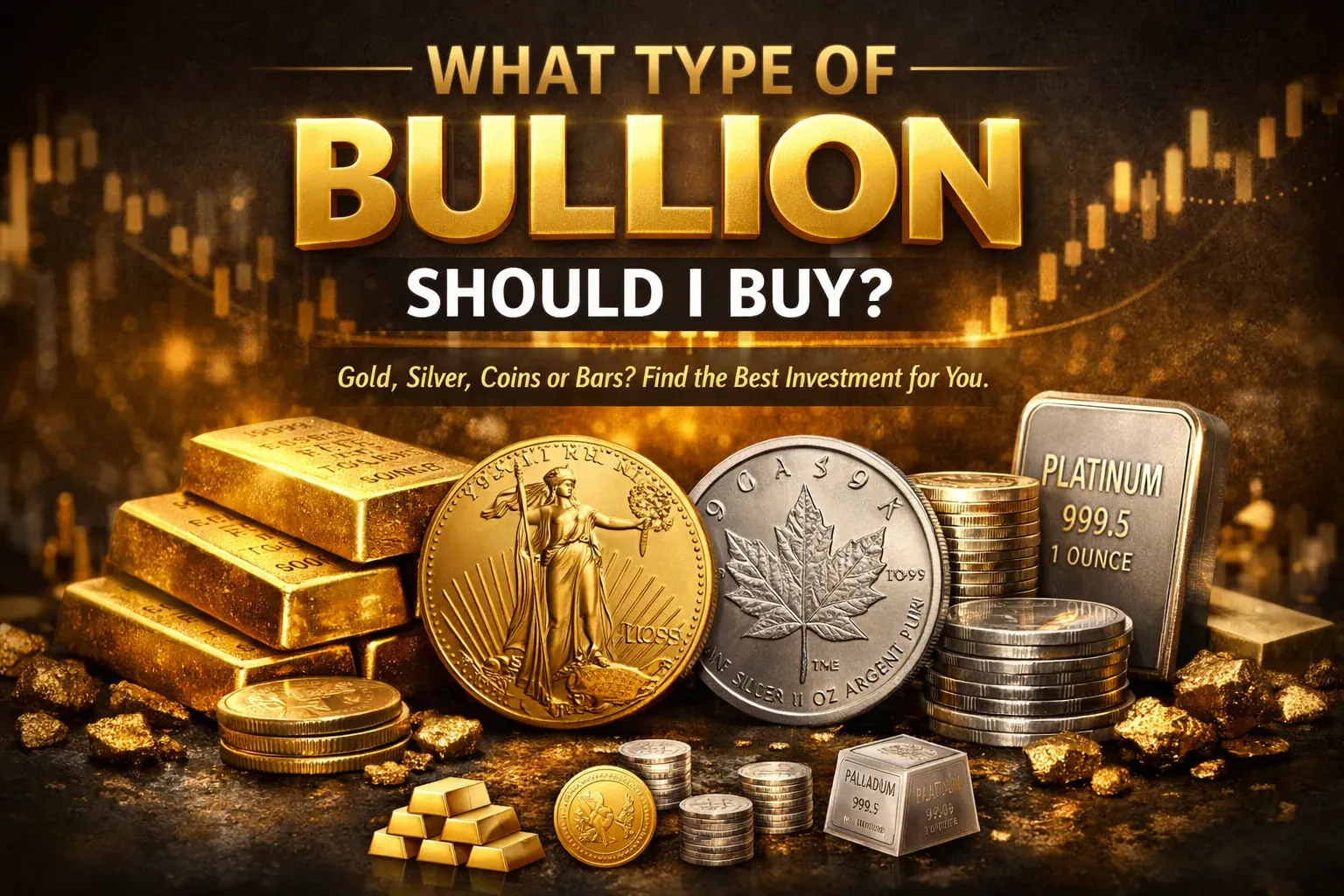
If you’re thinking about buying bullion, chances are you’ve already asked yourself the most important question:
What type of bullion should I buy?
It sounds simple, but once you start researching, things get confusing fast. Gold or silver? Coins or bars? Government mint or private mint? Small sizes or bulk purchases? And then there’s storage, premiums, resale value, taxes the list goes on.
The truth is, there’s no single “best” bullion for everyone. The right choice depends on your goals, budget, and how you plan to hold or sell your investment. This guide is designed to walk you through everything you need to know clearly, honestly, and without unnecessary jargon so you can make a confident decision.
Whether you’re buying your first ounce or adding to an existing stack, this article will help you choose the right bullion for your situation.
What Is Bullion, Really?
Bullion refers to physical precious metals valued primarily for their metal content, not for rarity, collectability, or artistic design. The most common bullion metals are:
- Gold
- Silver
- Platinum
- Palladium
Bullion is typically bought in standardized weights and high purity levels, making it easy to price, trade, and store. Unlike jewelry or collectible coins, bullion tracks the global market price (also called the spot price) of the metal itself.
Bullion usually comes in three main forms:
- Bars – Rectangular pieces of metal, available in many sizes
- Coins – Government-issued, legal tender bullion
- Rounds – Coin-shaped bullion produced by private mints (not legal tender)
Each form has its own advantages, and choosing the right one depends on how you plan to use your investment.
The Main Types of Bullion You Can Buy
Let’s break down the most common bullion options and who they’re best suited for.
Gold Bullion: The Classic Choice
Gold bullion has been a store of value for thousands of years and for good reason. It’s scarce, durable, universally recognized, and trusted across borders.
Forms of Gold Bullion
- Gold bars (1 gram to 1 kilogram and beyond)
- Gold coins (American Gold Eagle, Canadian Maple Leaf, Britannia, etc.)
Purity
Most investment-grade gold bullion is .999 or .9999 fine (24 karat).
Why Investors Choose Gold
- Hedge against inflation and currency devaluation
- Long-term wealth preservation
- High value in a small physical size
- Strong global liquidity
Pros
Holds value well during economic uncertainty
Easy to sell worldwide
Lower storage space compared to silver
Recognized by central banks and institutions
Cons
Higher entry price than silver
Premiums can be higher on small bars or coins
Best for: Long-term investors, wealth preservation, portfolio diversification, and those who want stability over speculation.
Silver Bullion: Affordable and Flexible
Silver is often called “gold’s little brother,” but it plays a very different role in a portfolio. It’s more volatile, more affordable, and widely used in industry.
Forms of Silver Bullion
- Silver bars (1 oz to 100 oz and larger)
- Silver coins (American Silver Eagle, Canadian Maple Leaf)
- Silver rounds
Purity
Most silver bullion is .999 fine.
Why Investors Choose Silver
- Lower cost per ounce
- Higher upside potential during bull markets
- Strong industrial demand (electronics, solar, medical uses)
Pros
Lower price point great for beginners
Easier to accumulate in bulk
Strong demand in both investment and industry
Cons
Requires more storage space
More volatile than gold
Higher premiums during supply shortages
Best for: Beginners, cost-conscious investors, those looking for growth potential, and people who want tangible assets without a large upfront cost.
Platinum and Palladium: Niche but Powerful
Platinum and palladium are less commonly discussed, but they play a unique role in the precious metals market.
Why Some Investors Consider Them
- Limited supply
- Heavy industrial use (especially in catalytic converters)
- Potential for sharp price movements
Pros
Scarcer than gold
Strong industrial demand
Portfolio diversification
Cons
Smaller market and lower liquidity
More price volatility
Less public familiarity
Best for: Experienced investors looking to diversify beyond gold and silver.
Coins vs Bars vs Rounds: Which Is Better?
This is one of the most common questions new buyers ask.
Bullion Coins
- Issued by government mints
- Legal tender (face value is symbolic)
- Highly trusted and liquid
Pros:
Easy to sell
Strong recognition
Often preferred by first-time buyers
Cons:
Higher premiums than bars
Bullion Bars
- Produced by government or private mints
- Available in many sizes
Pros:
Lower premiums per ounce
deal for bulk buying
Efficient storage
Cons:
Large bars can be harder to sell quickly
Bullion Rounds
- Private mint products
- Not legal tender
Pros:
Usually cheaper than coins
Same metal content
Cons:
Slightly lower recognition
How to Choose the Right Bullion for Your Goals
Before you buy anything, take a moment to answer a few key questions.
1. What Is Your Investment Goal?
- Wealth preservation: Gold coins or bars
- Long-term accumulation: Silver bars or rounds
- Liquidity and resale: Government-issued coins
- Diversification: Mix of gold and silver
2. What Is Your Budget?
If you’re starting small, silver bullion allows you to build a position without stretching your finances. Gold, while more expensive, offers higher value density.
3. How Will You Store It?
- Small quantities: Home safe
- Larger holdings: Bank locker or insured vault storage
- Consider insurance for significant value
4. Are You Concerned About Resale?
If quick resale matters to you, stick with:
- Popular coins
- Well-known bars
- Recognized mints
Liquidity is just as important as price.
5. Premiums vs Spot Price
Always understand the difference between:
- Spot price (market value of the metal)
- Premium (minting, distribution, dealer margin)
Lower premiums usually make bars and bulk silver more attractive for long-term holding.
Taxes and Regulations You Should Know About
Tax treatment varies by country and region. In India, precious metals may attract GST and capital gains tax depending on how long you hold them and how they are sold.
Always:
- Keep purchase invoices
- Understand holding period rules
- Consult a tax professional if unsure
Common Bullion Buying Mistakes to Avoid
Even smart investors make mistakes early on. Here are a few to watch out for:
- Buying based only on price without considering liquidity
- Confusing collectible coins with bullion
- Ignoring storage and insurance costs
- Panic buying during price spikes
- Not verifying purity and authenticity
A little patience and research go a long way.
Why Buying from a Trusted Bullion Dealer Matters
Where you buy is just as important as what you buy.
A reliable dealer:
- Offers transparent pricing
- Sells verified, authentic products
- Provides clear return and buyback policies
- Educates, not pressures
At Bullion Fortune, the focus is on helping buyers make informed decisions whether you’re purchasing a single coin or building a long-term precious metals portfolio.
Final Thoughts: So, What Type of Bullion Should You Buy?
The best bullion for you depends on your goals, budget, and comfort level.
- Choose gold for stability and wealth preservation
- Choose silver for affordability and growth potential
- Choose coins for liquidity and trust
- Choose bars for lower premiums and bulk investment
You don’t have to choose just one. Many experienced investors hold a balanced mix of gold and silver bullion, adjusted over time as goals change.
If you’re still unsure, start small, stay consistent, and buy quality bullion from a trusted source. Over time, confidence comes naturally.
For more simple bullion guides, market updates, and precious metals insights, you can also connect with us on our social media platforms and stay informed before making your next investment decision.


Leave a comment